Understanding what safety standards apply to beauty devices begins with a basic distinction: not every cosmetic product is regulated as a medical device. A home LED mask, microcurrent tool, laser hair-removal system, and radio-frequency handset may face different requirements. The intended use, electrical design, energy output, skin contact, and marketing claims all influence the safety pathway.
Industry data shows why this review matters. Grand View Research reports continued growth in the global beauty-device market, driven by home-use technology and professional treatments. Meanwhile, the FDA’s MAUDE database records device-related injury and malfunction reports across many product categories. These figures do not prove that beauty devices are unsafe. They show that testing, instructions, traceability, and post-market monitoring cannot be treated as paperwork.
Dr. Suzanne Schwartz, a former FDA medical-device safety leader, has emphasized that “safety and effectiveness are the cornerstones of medical-device regulation.” That principle helps explain the standards discussed in this guide. Depending on the product, manufacturers may consider IEC 60335-1 for household electrical safety, IEC 60601-1 for medical electrical equipment, IEC 62471 for optical radiation, ISO 14971 for risk management, and ISO 10993 for biological evaluation. Devices making medical claims may also require FDA clearance or conformity with the European Union Medical Device Regulation. There is no universal checklist. That is the difficult part. A device can look polished, feel gentle, and still lack adequate evidence. Buyers and manufacturers should question output limits, skin-contact materials, software controls, warnings, and real-world testing. Safety is practical, not decorative.
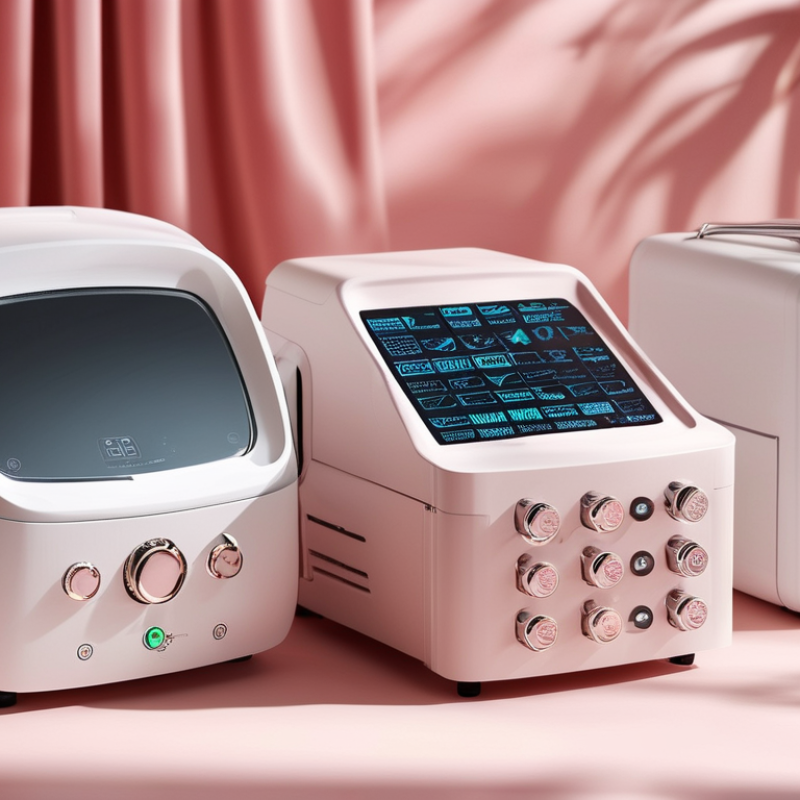
China’s top beauty devices are defined by verified performance, controlled risk, and traceable manufacturing—not attractive packaging. Grand View Research valued the global beauty devices market at about USD 34.9 billion in 2023, with strong growth projected through 2030. That expansion raises a practical question: can safety systems grow as quickly as consumer demand?
A credible device should match its intended use with the correct standard. Household electrical products may reference IEC 60335-2-23. Devices claiming medical functions require closer review under China’s medical device framework and relevant NMPA requirements. Phototherapy products should address IEC 62471 photobiological safety. Risk management under ISO 14971 and material safety testing under ISO 10993 can add important evidence, especially where electrodes, needles, or prolonged skin contact are involved. Real data matters.
Look for batch records, test dates, electrical insulation results, temperature controls, and clear operating limits. A cool metal head should not heat unevenly after ten minutes. A light device should state wavelength, energy output, and eye protection guidance. Small details reveal discipline.
No certificate answers every use case. Skin type, treatment frequency, and poor cleaning can still change outcomes. That is where many evaluations remain incomplete. A top device is not perfect; it makes its limits visible.
| Device Category | Typical Energy or Function | China Regulatory Route | Key Safety Standards or Requirements | Main Safety Evidence | Typical Risk Level | What Defines a Top Device? |
|---|---|---|---|---|---|---|
| LED Phototherapy Devices | Visible light or near-infrared light for cosmetic skin-care applications. | Consumer electrical product requirements may apply. If the product claims to diagnose, prevent, monitor, or treat a disease, it may fall under China’s medical-device framework and require the applicable NMPA pathway. | Electrical safety requirements under the applicable GB 4706 series; electromagnetic compatibility requirements under applicable GB standards; optical and photobiological safety assessment where relevant. | Wavelength and irradiance verification, exposure-time control, thermal testing, electrical insulation testing, EMC testing, eye-safety assessment, and user instructions. | Moderate | Stable light output, controlled exposure duration, reliable skin-contact or distance detection, adequate eye protection, and clearly limited cosmetic claims. |
| Laser Hair-Removal Devices | Coherent optical radiation directed at hair follicles. | Classification depends on intended use, technical characteristics, and claims. Devices making medical treatment claims may require medical-device registration or filing under the NMPA system. | Laser-product safety requirements under GB 7247.1 and applicable electrical, EMC, labeling, and medical-device requirements. | Laser class verification, output-power measurement, pulse-duration testing, skin-temperature monitoring, fault protection, eye-hazard analysis, and protective labeling. | High | Accurate energy and pulse control, effective cooling, skin-tone or contact sensing, protected emission paths, emergency shut-off, and complete laser safety information. |
| Intense Pulsed Light Devices | Broad-spectrum pulsed light delivered through a flash window. | Consumer or medical-device treatment depends on product claims, intended users, technical specifications, and classification in China. | Applicable optical-radiation and photobiological-safety requirements, together with electrical safety, EMC, thermal, and labeling requirements. | Pulse-energy and spectrum testing, flash-window temperature testing, skin-contact detection, UV filtering verification, eye-safety assessment, and misuse testing. | High | Consistent fluence, dependable skin-contact and skin-tone controls, effective UV filtering, cooling performance, and documented contraindications. |
| Radio-Frequency Skin-Care Devices | Radio-frequency energy intended to produce controlled tissue heating. | Cosmetic products may follow consumer-product requirements. Medical treatment claims can place the product within China’s medical-device regulatory framework. | Applicable GB electrical-safety and EMC standards; medical electrical equipment requirements, including GB 9706.1, may apply when the device is regulated as medical equipment. | Output-power verification, electrode-temperature testing, thermal runaway protection, insulation testing, EMC testing, and biological or clinical support when medical claims are made. | Moderate to High | Even energy distribution, closed-loop temperature control, automatic shut-off, insulated electrodes, and validated limits for skin-contact temperature. |
| Microcurrent and Electrical-Stimulation Devices | Low-current electrical pulses or direct current applied through skin-contact electrodes. | Regulatory status depends strongly on intended purpose and claims. Products claiming muscle treatment, rehabilitation, or disease-related effects may require medical-device compliance. | Applicable electrical safety and EMC standards; GB 9706.1 and relevant particular standards may apply to medical electrical equipment. | Current and voltage limitation, waveform verification, electrode-contact monitoring, leakage-current testing, battery protection, and user contraindication assessment. | Moderate | Precise current limitation, stable waveforms, automatic contact detection, safe battery charging, and clear warnings for users with implanted electronic devices. |
| Ultrasonic Beauty Devices | Mechanical acoustic energy used for cleansing, massage, or cosmetic skin-care functions. | Generally assessed according to intended use and claims. Medical treatment claims may trigger medical-device classification and additional technical documentation. | Applicable electrical safety, EMC, acoustic-output, mechanical, and thermal safety requirements; medical-device standards may apply where relevant. | Acoustic-output measurement, surface-temperature testing, waterproofing assessment where applicable, electrical safety testing, and durability testing. | Moderate | Controlled acoustic output, stable operating temperature, sealed construction where required, automatic timing, and clear restrictions for sensitive skin or implanted devices. |
| Cryotherapy and Cooling Devices | Controlled cooling or cold contact intended to reduce skin temperature. | Consumer-product or medical-device requirements depend on claims, temperature range, intended application, and risk profile. | Applicable electrical safety, EMC, thermal-safety, battery, and material-contact requirements; medical-device requirements may apply when therapeutic claims are made. | Minimum and maximum temperature testing, frostbite prevention, skin-contact uniformity, overcooling protection, battery safety, and fault-condition testing. | Moderate | Accurate temperature regulation, rapid fault detection, controlled contact pressure, automatic cycle limits, and materials suitable for repeated skin contact. |
| Vacuum and Suction Facial Devices | Negative pressure for cleansing, massage, or cosmetic skin stimulation. | Usually assessed as a consumer beauty appliance unless medical treatment or therapeutic claims change the regulatory classification. | Applicable electrical safety, EMC, mechanical safety, hygiene, and skin-contact material requirements. | Negative-pressure limitation, blockage testing, skin-injury assessment, nozzle hygiene validation, battery safety, and operating-time control. | Low to Moderate | Adjustable suction, rapid pressure release, smooth and hygienic contact surfaces, easy cleaning, and protection against prolonged skin contact. |
| Multi-Function Beauty Platforms | Two or more functions, such as LED, RF, microcurrent, heat, cooling, or ultrasonic energy. | Each function and claim must be assessed. Combining functions does not remove the need to meet the requirements applicable to each individual energy source. | Applicable standards for every integrated function, plus system-level electrical safety, EMC, software, charging, thermal, and labeling requirements. | Individual-function testing, combined-mode testing, software verification, interlock testing, thermal mapping, battery testing, and foreseeable-misuse evaluation. | Moderate to High | Independent safety controls for each energy source, reliable mode switching, software safeguards, clear contraindications, and verified performance in combined operating modes. |
: Testing depends on intended use, energy source, and risk level. Household devices may need electrical safety and electromagnetic compatibility tests. Medical claims can trigger registration requirements. The product matters more than its advertising words.
Laboratories may examine insulation, overheating, leakage current, interference, battery safety, and durability. They assess real operating conditions. A neat report can still miss weak user instructions.
They need wavelength, output power, exposure time, and photobiological safety checks. Eye protection deserves close review. Short sessions only. Maximum treatment time should be clearly stated.
Yes, depending on materials and contact conditions. Irritation or sensitization testing may be needed. Skin types vary, so one certificate cannot prove universal safety. This limitation is easy to overlook.
They should keep risk analyses, design records, test reports, labels, and user instructions. Quality and hazard-control systems can support this file. Documentation may look complete, yet traceability can remain thin.
Verify classification, registration or filing needs, Chinese labels, supplier qualifications, and traceability records. Check batch information on packaging. Review physical samples, not documents alone.
No. The report should match the exact model and production date. It should identify the applicable standard and laboratory scope. Paper is not proof. Manufacturing changes can alter performance.
Instructions should explain treatment time, sensitivity warnings, cleaning, storage, and prohibited use. They should also explain eye protection. Small omissions can create serious safety problems. Rules change. Check current authority guidance.
China’s top beauty devices are defined by more than attractive design or advanced functions. They should offer reliable performance, clear instructions, suitable materials, and safety features that reduce risks such as overheating, electrical faults, skin irritation, or accidental misuse. Understanding what safety standards apply to beauty devices is essential for consumers, manufacturers, and importers. Depending on the device’s intended use and technology, relevant requirements may cover electrical safety, electromagnetic compatibility, materials, labeling, hygiene, and product quality control.
Before entering the market, beauty devices should undergo appropriate testing and certification through qualified procedures. Manufacturers are expected to maintain consistent production, document technical specifications, assess potential risks, and provide accurate user guidance. Importers should verify compliance documents, test reports, labeling, and traceable supplier information. Consumers can also check safety markings, instructions, warranty details, usage limitations, and whether the seller provides credible certification evidence. Comparing these details before purchase helps users choose devices that are better tested, responsibly produced, and suitable for their intended application.

 Rudiz Beauty