The question “are beauty devices effective” deserves a careful answer, especially in China’s fast-growing home skincare market. Red light masks, microcurrent tools, radiofrequency devices, and ultrasonic cleansers do not work in the same way. Their results depend on energy strength, treatment frequency, skin condition, and correct handling. A glowing product page is not clinical evidence.
Dermatologist Dr. Dendy Engelman has stated, “At-home devices can be effective, but they are not a replacement for professional treatments.” This distinction matters. A red light mask may gradually support brighter-looking skin. A microcurrent device may create a temporary lifted appearance. Neither should promise permanent wrinkle removal. Some effects are subtle.
Small details change the experience. Clean, dry skin improves device contact. A patch test may reveal irritation before a full session. Protective eyewear matters for certain light-based tools. Users should also check certification, warranty terms, power specifications, and after-sales support before buying in China.
The best type to buy depends on the goal, budget, and tolerance for regular use. LED devices suit users seeking a gentle routine. Microcurrent tools require consistent application and conductive gel. Radiofrequency devices need greater caution because excess heat can irritate skin. Cheap is not always practical.
There is room for doubt. Research quality varies, and many studies involve professional equipment rather than consumer models. Results can disappear when use stops. This guide compares technologies, evidence, safety considerations, and realistic expectations, helping readers choose more responsibly rather than chasing dramatic promises.
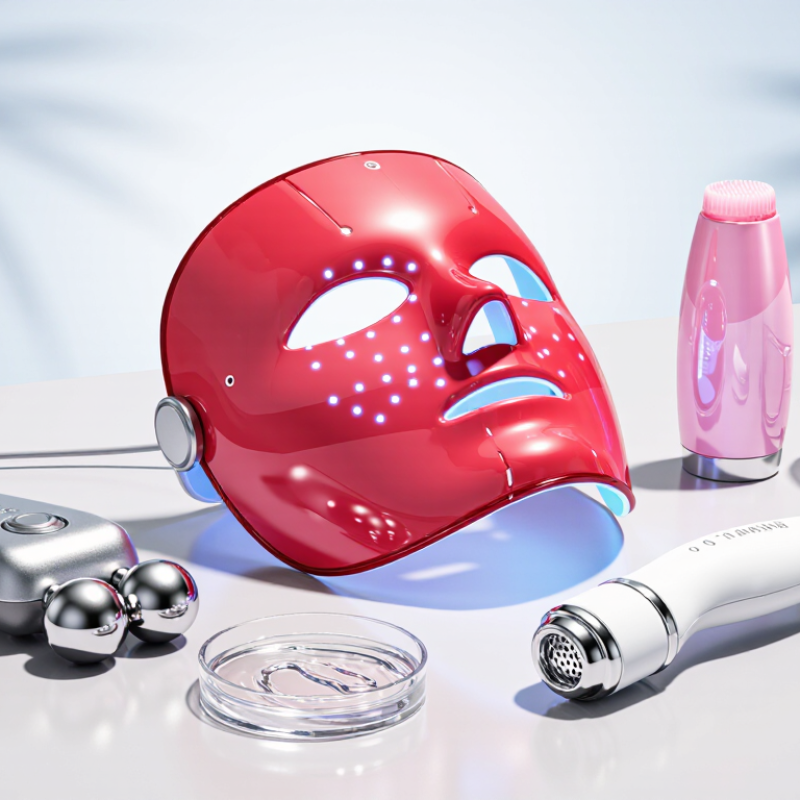
Beauty devices are consumer tools that apply controlled energy or movement to the skin. Common types include LED masks, microcurrent tools, radiofrequency devices, and ultrasonic cleansers. Each works differently. LED uses specific light wavelengths, while microcurrent delivers a very low electrical current. Radiofrequency gently heats deeper tissue. Ultrasonic tools create rapid vibrations that help loosen surface debris.
The market is expanding quickly. Fortune Business Insights estimated the global beauty devices market at USD 35.74 billion in 2023. McKinsey also projects the wider beauty industry could reach USD 590 billion by 2028. These figures show strong demand, not guaranteed results. In practice, device performance depends on energy strength, contact time, skin condition, and consistent use.
A warm radiofrequency head may feel like a small stone moving across the cheek. LED treatment feels quieter, with only mild warmth or brightness. The limits are easy to miss. The U.S. Food and Drug Administration distinguishes cosmetic claims from medical claims, so consumers should check instructions carefully. Clinical evidence is often based on small studies and short follow-up periods. My practical view is cautious: choose clear specifications, use eye protection when required, and stop if burning or persistent redness appears. Results can be uneven.
Light-based beauty devices work by delivering specific wavelengths to the skin. The chart shows representative nominal wavelengths commonly used in home LED devices: blue light around 430 nm, red light around 645 nm, and near-infrared light around 830 nm.
Wavelength alone does not prove effectiveness. Results also depend on irradiance, treatment time, product quality, skin condition, and consistent use. Choose devices with clear safety instructions and suitable regulatory information.
Beauty devices may improve common skin concerns, but their effects are usually modest. LED devices can support calmer-looking skin and may help reduce mild acne-related inflammation. Results often appear slowly, after several consistent weeks. They do not replace professional acne treatment.
Microcurrent devices may temporarily make facial contours look more lifted. Evidence for lasting wrinkle reduction remains limited. Radiofrequency tools can support firmer-looking skin through controlled heat, but incorrect use may cause irritation.
Pigmentation is more complicated. Light-based devices may worsen dark spots in some skin tones, especially without careful settings and daily sunscreen.
Real-world routines matter more than impressive promises. Clean, dry skin is important before use. Follow the stated schedule, and stop if burning or persistent redness develops. A patch test can reveal sensitivity, though it cannot predict every reaction.
People with active skin disease, implanted electronic devices, or recent procedures should seek medical advice first. When choosing a China-made device, check its instructions, safety information, adjustable intensity, and customer support.
Avoid products claiming instant results. That claim deserves doubt. A useful device is one you can use safely and consistently, even when improvement feels frustratingly slow.
China’s beauty device market offers several practical categories for home users. LED masks use red, blue, or near-infrared light. Red light is commonly chosen for the appearance of fine lines, while blue light targets blemish-prone skin. Results are usually gradual, not dramatic.
Microcurrent devices deliver gentle electrical stimulation through wet contact points. Users often choose them for temporary facial firmness. Radio-frequency devices warm deeper skin layers and require careful temperature control.
Ultrasonic skin scrubbers use vibration to loosen surface debris, but heavy pressure can cause redness. They are not magic tools.
Some devices are designed for hair reduction through light-based technology. Suitability depends on skin tone, hair color, medication, and correct settings. Eye protection matters with bright light devices. Avoid use over irritated skin, open wounds, or suspicious growths. A qualified professional should assess uncertain cases.
In practical testing, comfort affects consistency more than impressive specifications. A device may promise visible change, yet irregular use weakens the result. I still question broad claims based on small studies or dramatic before-and-after images. Check electrical safety markings, instructions, return policies, and cleaning requirements before buying in China. Do not share conductive gels, contact surfaces, or unclean attachments. A simpler device used correctly may outperform a complicated one left in a drawer.
Choosing the best beauty device starts with your skin concern, not its appearance. LED devices may support calmer-looking skin, while cleansing tools can remove surface oil more effectively. Microcurrent devices require regular use and careful technique. I would check the user manual, treatment intensity, operating time, and safety warnings before buying. Clear technical details suggest a more reliable product. Vague promises do not.
Tips: Choose a device with adjustable settings, washable contact surfaces, and a readable instruction guide. Check whether independent testing or clinical evidence supports its main claim. Confirm the return policy and warranty. Avoid products that promise instant, permanent results. Your skin may react differently from online reviews.
Think about daily convenience. A heavy device may stay in a drawer, even if it works well. Measure charging time, storage space, and cleaning requirements. For sensitive skin, test a small area first and stop if burning or persistent redness appears. Eye protection matters for light-based tools. People with certain medical conditions or implanted devices should ask a qualified healthcare professional before using electrical treatments. I once underestimated how much technique affects results; pressure, timing, and consistency can change the experience. The “best” device is often the one you can use correctly and safely.
Beauty devices can support a careful skincare routine, but their results are usually modest. LED masks may improve the appearance of mild redness, while microcurrent tools can create temporary facial firmness. Cleansing devices mainly remove surface debris. They do not replace prescription treatment or professional procedures. Evidence also varies between device types, settings, and study quality.
Safety matters more than dramatic claims. Use each device on clean, dry skin and follow its timing instructions. Start with the lowest comfortable setting. A mild tingling sensation is not proof of effectiveness. Stop immediately if you feel burning, sharp pain, swelling, or lasting redness. Avoid use on broken skin, active irritation, or unexplained rashes. Clean contact surfaces after every session. Never share them without proper disinfection.
When buying in China, check the manual, warranty, electrical specifications, and stated safety testing. Certification labels can support reliability, but they cannot guarantee visible results. People with implanted electronic devices, light sensitivity, or ongoing skin conditions should ask a qualified clinician before use. Some medicines also increase sensitivity to light or heat. Keep sessions consistent and record changes under similar lighting. I would not combine several heated or stimulating devices in one evening; more intensity may simply create more irritation.
Evidence-informed comparison of common home-use beauty devices. Specifications are typical ranges and may vary by device design and local regulations.
| Device Type | Main Cosmetic Target | Typical Technology or Range | What Evidence Suggests | Key Limitations | Important Safety Points | Buying and Use Guidance |
|---|---|---|---|---|---|---|
| LED Light Therapy | Mild acne, inflammation, uneven tone, and fine lines | Red or near-infrared light is commonly around 630–850 nm; blue light for acne is commonly around 415 nm | May provide modest improvement in inflammatory acne and skin appearance after consistent use. Results are gradual rather than immediate. | Does not remove deep wrinkles, severe acne scars, or significant skin laxity. Home devices are generally less powerful than clinical systems. | Use eye protection when required. Photosensitive medicines and conditions such as lupus require medical advice before use. | Choose a device with clearly stated wavelength, treatment time, and safety instructions. Follow the schedule instead of increasing exposure. |
| Radiofrequency (RF) | Temporary skin tightening and texture improvement | Electrical energy commonly delivered in the radiofrequency range; professional systems often use controlled skin heating | May stimulate dermal remodeling and produce modest tightening over several weeks or months. | Home results are usually subtle and temporary. It cannot replace surgery or reliably correct substantial sagging. | Overheating may cause burns, pain, pigment changes, or fat loss. Avoid use over implanted electronic devices unless a clinician confirms safety. | Look for temperature controls, automatic shut-off, and clear contraindications. Use conductive gel only when required by the instructions. |
| Microcurrent | Temporary facial contouring and muscle stimulation | Very low-level electrical current, usually measured in microamperes; exact output varies considerably | May create short-term changes in perceived firmness or facial contour. Strong evidence for lasting lifting is limited. | Effects are subtle and often dependent on regular use. It cannot remove excess skin or reduce facial fat in a controlled way. | Do not use over a pacemaker or other implanted electronic device. Stop if there is persistent pain, burning, or unusual muscle spasm. | Check that the output and treatment protocol are disclosed. Use the recommended conductive medium to reduce uncomfortable sensations. |
| Home IPL | Reduction of unwanted body hair | Broad-spectrum flashes, commonly covering approximately 500–1,200 nm, with lower energy than many clinic systems | Can reduce hair regrowth when used repeatedly because light targets pigment in the hair follicle. It is not guaranteed to permanently remove all hair. | Works best when there is strong contrast between dark hair and lighter skin. It is less effective on very light, gray, red, or white hair. | Possible risks include burns, blisters, eye injury, and temporary or permanent pigment changes. Do not use on tattoos, very dark moles, or tanned skin unless permitted by the instructions. | A skin-tone sensor, adjustable intensity, cooling, and a flash counter are useful features. Patch-test first and shave rather than wax before treatment when instructed. |
| Ultrasonic Skin Spatula | Surface cleansing and temporary hydration or smoothness | High-frequency mechanical vibration, commonly in the tens of kilohertz rather than cosmetic ultrasound imaging frequencies | May loosen surface debris and improve the feel of skin temporarily when used on damp skin. | Cannot permanently shrink pores, remove deep comedones, or treat active dermatological disease. | Excessive pressure or frequent use may cause irritation, redness, or barrier damage. Avoid broken, infected, or actively inflamed skin. | Use only with sufficient water-based moisture and gentle pressure. Clean and disinfect the metal blade according to the instructions. |
| Home Microneedling Roller or Pen | Texture and fine lines; professional treatment for scars | Fine needles create controlled micro-injuries; needle length and penetration depth determine risk | Microneedling can improve some scars and wrinkles in clinical settings, but evidence and safety are less favorable for unsupervised deep home treatment. | Results depend heavily on technique and skin condition. It cannot safely treat all scars, pigmentation, or active acne at home. | Risks include infection, prolonged redness, post-inflammatory hyperpigmentation, scarring, and herpes reactivation. Never share needles or use on active acne or infection. | For home use, avoid deep penetration and follow local regulations. Single-use sterile cartridges and professional guidance are safer for invasive procedures. |
| Galvanic or Iontophoresis Device | Temporary cleansing feel and product application support | Low direct current used with a compatible water-based product | May alter the feel of skin and support delivery of some compatible ingredients, but broad claims about deep product penetration are not well established. | Benefits depend on product chemistry, polarity, contact, and device settings. It does not replace prescription treatment. | May cause tingling, irritation, or chemical burns if used incorrectly. Avoid with implanted electronic devices and on damaged skin. | Use only products specifically compatible with the device and follow polarity instructions. Do not use near the eyes or thyroid area unless directed. |
| Cryotherapy or Cooling Device | Temporary redness relief, puffiness reduction, and soothing | Cooling surface or controlled cold exposure; temperatures vary by design | Cold can temporarily reduce blood flow and swelling, but it does not produce permanent lifting or fat reduction in ordinary cosmetic use. | Effects are short-lived. Uncontrolled freezing is not equivalent to regulated medical fat-freezing procedures. | Prolonged contact can cause cold burns, numbness, nerve injury, or skin damage. Avoid if you have cold sensitivity or circulation disorders without medical advice. | Choose a device with temperature monitoring and an automatic time limit. Keep the device moving when instructed and stop if numbness or pain occurs. |
| Facial Cleansing Brush | Removal of surface oil, makeup, and debris | Rotating or vibrating bristles made from synthetic or silicone materials | Can improve cleansing efficiency, but it has no proven ability to permanently tighten skin or reduce pore size. | Overuse can worsen dryness, acne irritation, rosacea, or sensitive-skin symptoms. | Do not share the brush head. Avoid use on broken skin, eczema flares, sunburn, or active infection; replace or clean the head regularly. | Select adjustable intensity and a washable head. Use gentle cleanser, light pressure, and short sessions rather than aggressive scrubbing. |
LED devices and gentle cleansing devices generally have lower operational risk when used correctly. Home IPL may be useful for suitable skin and hair combinations, but it requires stricter screening and careful adherence to safety instructions.
RF, IPL, invasive microneedling, galvanic current, and cold-based devices can cause injury if the settings, skin type, or medical history are unsuitable. Professional assessment is advisable for high-risk use.
Avoid treatment on open wounds, active infection, unexplained lesions, severe inflammation, or recently sunburned skin. Seek medical advice when pregnant, taking photosensitizing medicine, or using an implanted electronic device.
Note: Home beauty devices can produce modest or temporary cosmetic improvements. Effectiveness depends on device specifications, skin type, treatment consistency, and correct use. This table is educational and does not replace advice from a qualified dermatologist or other healthcare professional.
Beauty devices are consumer tools using controlled light, heat, electricity, or movement. They are not magic tools. Results depend on settings, contact time, skin condition, and regular use.
LED devices apply selected light wavelengths to the skin. Red light is commonly used for the appearance of fine lines. Blue light suits blemish-prone skin for some users. Changes are usually gradual.
A microcurrent device delivers a very low electrical current through wet contact points. Users often seek temporary facial firmness. The contact areas must stay moist. Expectations can still be too high.
Radiofrequency devices warm deeper skin layers. The head may feel like a small stone moving across your cheek. Temperature control matters. Stop if burning or lasting redness appears.
Ultrasonic tools create rapid vibrations that loosen surface debris. Use light pressure across damp skin. Heavy pressure may cause redness. Gentle movement works better.
No device suits every person or skin condition. Avoid use over irritated skin, open wounds, or suspicious growths. Check medication concerns before using light-based hair-reduction tools. Uncertain cases need professional advice.
Check safety markings, instructions, cleaning rules, and return policies. Confirm whether eye protection is required. Clear specifications matter more than dramatic photographs. A simpler tool may be easier to use correctly.
Follow the recommended schedule and keep the device clean. Regular use often matters more than impressive technical claims. Do not share conductive gels or unclean attachments. Consistency is difficult. That is worth admitting.
Beauty devices are at-home tools that use technologies such as light, microcurrent, radio frequency, ultrasound, or gentle cleansing vibrations to support skincare routines. Their purpose is to improve the appearance of common concerns, including dullness, uneven texture, mild acne, puffiness, and early signs of aging. The question “are beauty devices effective” depends on the device, treatment method, skin condition, and consistency of use. Some may provide gradual, modest improvements, but they should not be viewed as replacements for professional medical care or realistic skincare habits.
In China, popular options include LED light devices, facial cleansing tools, microcurrent instruments, cooling or heating massagers, and home radio-frequency devices. When choosing the best type to buy, consider the intended concern, technology, safety features, instructions, skin compatibility, and ease of maintenance rather than appearance alone. Users should follow directions carefully, avoid excessive sessions, keep devices clean, and stop use if irritation occurs. People with sensitive skin, implanted electronic devices, or specific medical conditions should seek professional advice before using advanced beauty technology.

Rudiz Beauty